
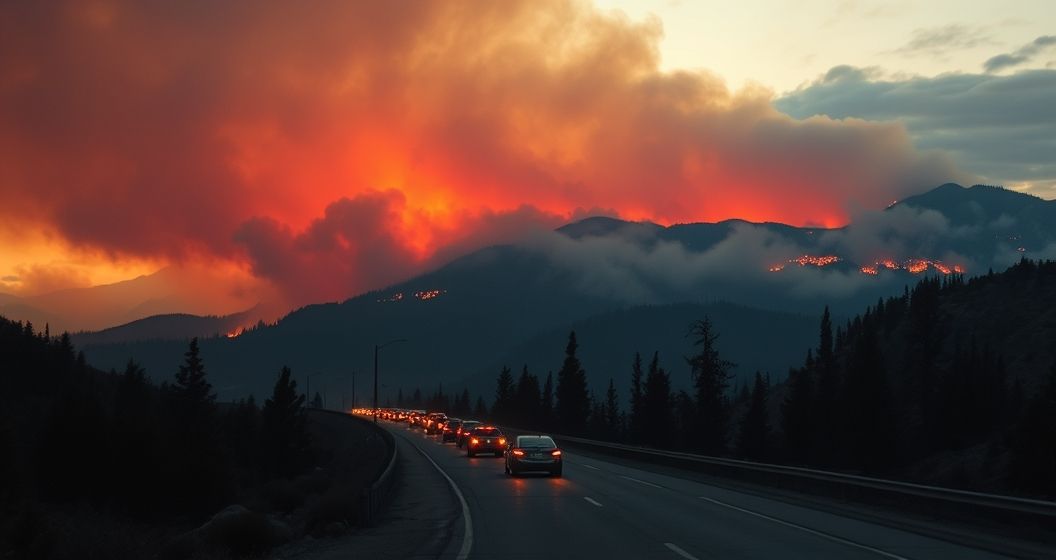
Wildfires are raging across parts of Western Canada, forcing thousands of residents from their homes in British Columbia and Alberta. Authorities have issued multiple evacuation orders and alerts as strong winds and dry conditions fuel the fast-moving blazes. The situation has prompted a large-scale emergency response, with crews battling to contain the fires while ensuring the safety of affected communities. This marks an intense and challenging start to the nation’s wildfire season.
State of Emergency in British Columbia
The situation is particularly severe in northeastern British Columbia, where the community of Fort Nelson and the nearby Fort Nelson First Nation are under an evacuation order. The Parker Lake wildfire, burning just kilometres away, has grown rapidly, posing a significant threat to the town. Officials have declared a provincial state of emergency to coordinate response efforts and have urged all remaining residents to leave the area immediately for their own safety. The aggressive fire behaviour is making containment efforts extremely difficult.
Alberta Also on High Alert
Neighbouring Alberta is facing its own significant wildfire threat, with several communities on high alert. An evacuation order has been issued for parts of Fort McMurray as the MWF-017 wildfire approaches. This brings back difficult memories of the devastating 2016 wildfire that destroyed large parts of the city. Residents in affected areas have been instructed to move to safety, and reception centres have been established. The fire is currently classified as out of control, and officials warn that conditions could change quickly.
The Human Impact of Displacement
Beyond the flames, the human impact is immense. Thousands of displaced residents face uncertainty as they wait for news about their homes and communities. Evacuees have described stressful and hurried escapes, grabbing essential belongings before fleeing. The emotional toll of displacement, combined with concerns over property and livelihoods, weighs heavily on families. Emergency support services are working to provide shelter, food, and information to those affected by the evacuation orders in both provinces.
Widespread Air Quality Concerns
The effects of the wildfires are being felt hundreds of kilometres away, as thick smoke blankets large areas of Western Canada and drifts into neighbouring provinces and the United States. Air quality advisories are in effect for numerous regions, warning of high concentrations of fine particulate matter. Health officials are advising residents, especially those with respiratory conditions, young children, and the elderly, to limit outdoor activities and stay indoors where possible to avoid the harmful effects of the smoke.
As emergency crews continue their tireless efforts to battle the blazes, the situation remains volatile. The focus remains on protecting lives and property while navigating the challenging weather conditions. The early and aggressive start to this year’s fire season serves as a stark reminder of the growing wildfire risk facing many Canadian communities.