
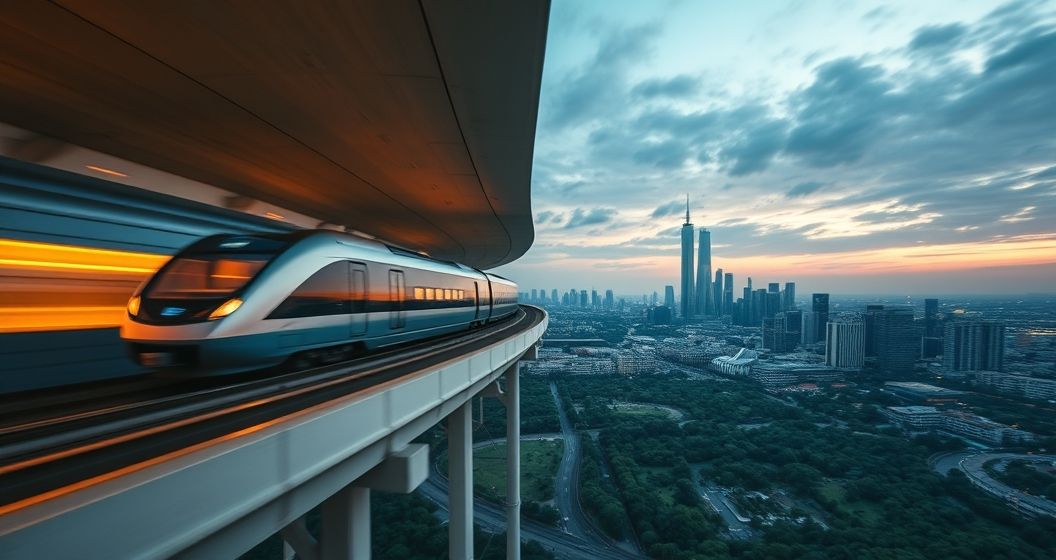
India’s ambitious infrastructure development is taking a significant leap forward with the operational expansion of the Delhi-Ghaziabad-Meerut Regional Rapid Transit System (RRTS). This high-speed rail corridor is set to redefine commuting across the National Capital Region (NCR), drastically cutting travel times and easing road congestion. The project is a cornerstone of the government’s plan to build a modern, efficient, and sustainable public transport network for its burgeoning urban centers.
A New Era in Urban Mobility
The RRTS is more than just a train service; it represents a new era in urban mobility. Designed for speeds of up to 180 km/h, the semi-high-speed trains, known as Namo Bharat, will reduce the journey between Delhi and Meerut to less than an hour. This development is expected to provide a reliable and comfortable travel alternative for millions of daily commuters who currently rely on congested road networks, significantly improving their quality of life.
Featuring state-of-the-art coaches with modern amenities, the service prioritizes passenger comfort and safety. The implementation of advanced signaling and control systems ensures high frequency and punctuality, making it a dependable option for daily travel. This focus on user experience is critical to encouraging a modal shift from private vehicles to public transportation, a key goal for urban planners in the region.
Economic and Environmental Benefits
The impact of the RRTS corridor extends far beyond convenient travel. It is poised to be a powerful economic catalyst, fostering balanced regional development by connecting industrial and urban hubs more effectively. The improved connectivity is expected to stimulate real estate growth, create new business opportunities, and generate significant employment throughout the corridor. This integration will help distribute economic activity more evenly across the NCR.
A Sustainable Transit Solution
In an age of growing environmental concerns, the RRTS project stands out as a model for sustainable urban development. By promoting public transport, it aims to reduce the number of private vehicles on the road, leading to a substantial decrease in air pollution and carbon emissions. The electric-powered trains contribute to a cleaner transport ecosystem, aligning with India’s national goals for environmental conservation and sustainable growth.
The Future of Connectivity
The Delhi-Meerut line is the first of several planned RRTS corridors intended to create a comprehensive transit network across the NCR. This visionary project is part of a larger strategy to develop future-ready infrastructure that can support the country’s rapid economic and demographic expansion. The successful implementation of this corridor will serve as a blueprint for similar projects in other major metropolitan areas across India.
In conclusion, the RRTS project is a landmark achievement in India’s journey towards modernizing its urban infrastructure. By offering a fast, safe, and eco-friendly mode of transport, it not only addresses the immediate challenges of traffic congestion but also lays the foundation for a more integrated, prosperous, and sustainable National Capital Region.
