
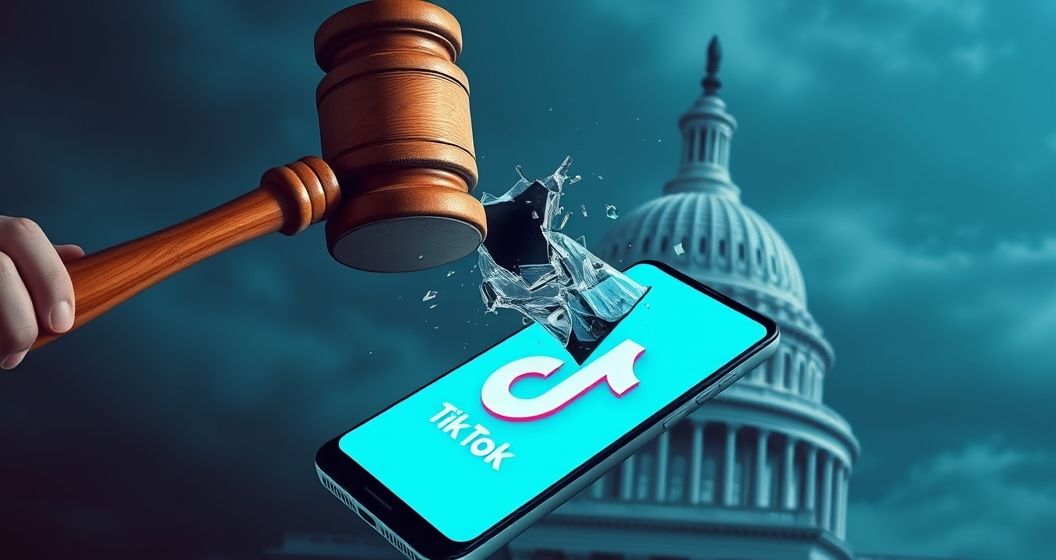
The future of the popular social media platform TikTok is now in question within the United States. The House of Representatives has passed a significant piece of legislation that could lead to a nationwide ban of the application. This move, which garnered strong bipartisan support, targets the app’s ownership by the Chinese company ByteDance and cites growing national security concerns as its primary motivation. The bill now heads to the Senate for further consideration, where its future is less certain.
Details of the Divest-or-Ban Bill
The legislation presents a clear ultimatum to TikTok’s parent company, ByteDance. It mandates that the company must divest its ownership of the app within approximately six months of the bill becoming law. Failure to find a suitable, non-Chinese buyer and complete a sale within this timeframe would result in the prohibition of the app from US app stores and web hosting services, effectively implementing a nationwide ban on its operations within the country.
This decisive action followed a swift legislative process, reflecting a rare moment of unity among lawmakers on the issue. Proponents argue that the measure is not an outright ban but rather a necessary step to separate the platform from potential influence by the Chinese government. The focus, they claim, is on the ownership structure and the security risks it presents, rather than on the content shared by its millions of American users who rely on it for entertainment, community, and commerce.
National Security at the Forefront
The primary driver behind the bill is the long-standing concern among intelligence officials and lawmakers about TikTok’s connection to China. There are widespread fears that the Chinese government could compel ByteDance to hand over sensitive data collected from its estimated 170 million American users. This data, which includes browsing habits, location information, and personal preferences, could potentially be used for espionage, intelligence gathering, or influence campaigns, posing a direct threat to national security.
Furthermore, critics worry about the platform’s powerful content algorithm. They suggest that Beijing could manipulate the algorithm to promote certain narratives or suppress information critical of the Chinese Communist Party. This potential for covert propaganda is a key argument for those who believe that the app, in its current form, represents an unacceptable risk to the American public and its democratic processes, especially during election cycles.
An Uncertain Path Forward
Despite its overwhelming passage in the House, the bill’s fate in the Senate remains uncertain. While some senators have expressed support for the measure, others have voiced concerns about its potential impact on free speech and the digital economy. The legislative path forward is not guaranteed, and the bill could face significant debate and potential amendments before it ever reaches a final vote on the Senate floor.
Legal and Corporate Responses
TikTok has vehemently opposed the legislation, launching a campaign encouraging its users to contact their representatives in protest. The company maintains that it has never shared US user data with the Chinese government and would not do so if asked. Legal experts also anticipate that should the bill become law, it would almost certainly face immediate and robust legal challenges on First Amendment grounds, arguing it infringes on the free expression rights of its users and creators.