
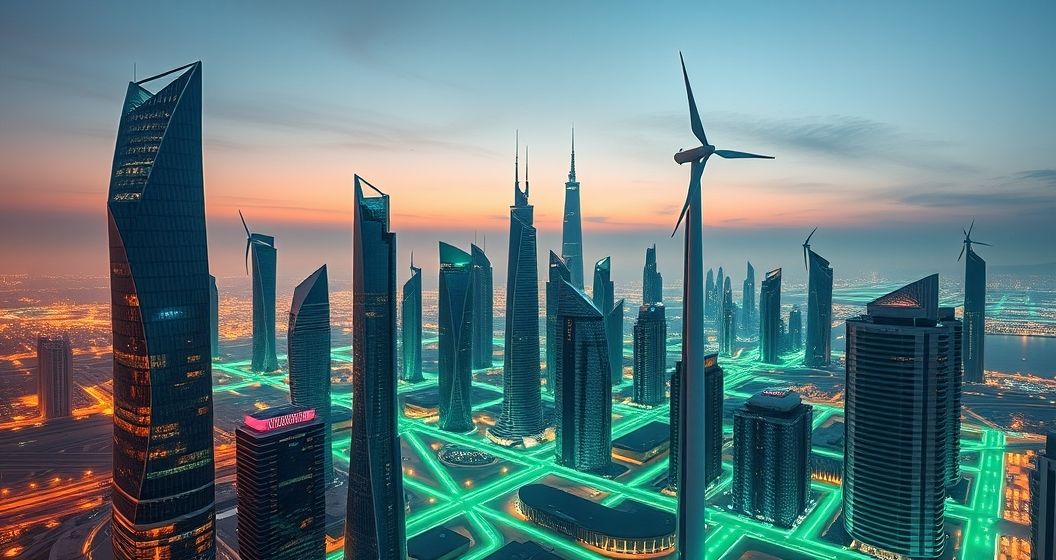
The United Arab Emirates has unveiled a significant new investment strategy aimed at accelerating its transition to a green economy. This initiative channels substantial funding into renewable energy projects both domestically and internationally. The move underscores the nation’s commitment to sustainability and its goal of becoming a global leader in clean energy technology, further diversifying its economy beyond traditional fossil fuels and reinforcing its environmental credentials on the world stage.
A Strategic Push Towards Sustainability
The new investment plan is a cornerstone of the UAE’s broader vision for a sustainable future. Government officials have highlighted that this financial commitment is designed to fast-track the development of large-scale renewable energy infrastructure. The primary goal is to significantly increase the share of clean energy in the country’s total energy mix. This strategic push is aligned with national climate targets and aims to create a robust framework for long-term environmental and economic stability, positioning the UAE as a key player in the global energy transition.
This initiative goes beyond mere power generation; it represents a fundamental shift in economic policy. By prioritizing green projects, the UAE aims to stimulate innovation in related sectors such as green hydrogen, energy storage, and smart grid technology. The plan is expected to attract leading international technology firms and experts, fostering a vibrant ecosystem for sustainable development. This comprehensive approach ensures that the investment yields benefits across multiple economic and social domains, solidifying the nation’s reputation as a forward-thinking hub.
Key Areas of Investment
A significant portion of the allocated funds will be directed towards expanding solar power capacity. The UAE already hosts some of the world’s largest solar parks, and this new capital injection will finance the development of even more ambitious projects. The focus will be on leveraging the country’s abundant solar resources to generate cost-effective and reliable clean electricity. These projects will utilize the latest photovoltaic technologies to maximize efficiency and output, contributing directly to reducing the nation’s carbon footprint.
Beyond solar, the strategy also earmarks funds for waste-to-energy facilities and emerging technologies like green hydrogen production. Waste-to-energy plants will address environmental challenges related to waste management while providing a consistent power source. Meanwhile, investments in green hydrogen are intended to position the UAE at the forefront of a future clean fuel market. These diverse investments demonstrate a balanced and strategic approach to building a resilient and multi-faceted renewable energy portfolio for the future.
Economic and Environmental Impact
The economic implications of this investment are substantial. The development of these large-scale projects is projected to create thousands of specialized jobs in engineering, construction, and operations. Furthermore, it will foster the growth of a local supply chain for renewable energy components and services. This contributes directly to the UAE’s economic diversification goals, reducing its reliance on volatile global oil markets and building a more resilient, knowledge-based economy centered on sustainable industries.
From an environmental perspective, the initiative is a critical step towards achieving the UAE’s climate objectives, including its net-zero emissions pledge. By displacing fossil fuel-based power generation, these green projects will lead to a significant reduction in greenhouse gas emissions. This proactive stance on climate action enhances the country’s international standing and contributes positively to global efforts to combat climate change, ensuring a healthier and more sustainable environment for future generations.
