
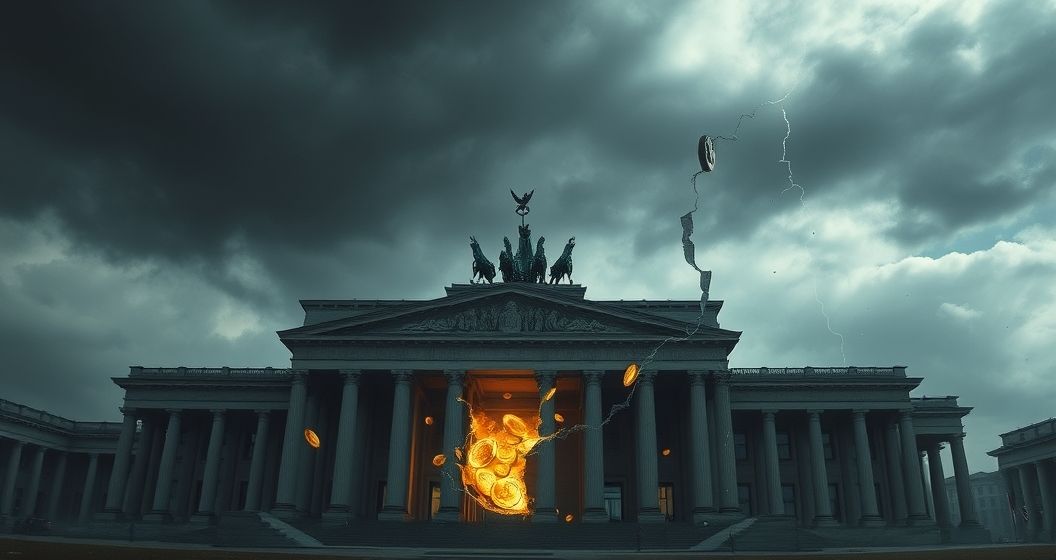
Germany’s ruling coalition is facing one of its most significant challenges as it struggles to finalize the 2024 federal budget. A major fiscal crisis, triggered by a constitutional court ruling, has exposed deep ideological divides within the three-party government. The outcome of these intense negotiations will not only determine the country’s economic path but also test the stability of Chancellor Olaf Scholz’s administration, with public and industrial sectors watching anxiously.
The Constitutional Court’s Decisive Ruling
The current turmoil began when Germany’s highest court declared the government’s attempt to repurpose €60 billion of unused pandemic-era debt for climate and industry projects unconstitutional. This decision created a massive shortfall in the government’s financial plans, forcing an immediate and difficult re-evaluation of spending priorities. The ruling effectively reinstated the country’s strict “debt brake” (Schuldenbremse), a constitutional limit on new borrowing that had been suspended during recent crises.
Clashing Ideologies Within the Coalition
The budget gap has intensified friction between the coalition partners, each with distinct economic philosophies. The situation highlights the inherent challenges of governing with a diverse political alliance composed of the Social Democrats (SPD), the Greens, and the pro-business Free Democrats (FDP).
FDP’s Push for Fiscal Austerity
Finance Minister Christian Lindner, leader of the FDP, is adamant about adhering to the debt brake and has firmly ruled out tax increases. His party champions fiscal discipline and argues that the state must live within its means, even if it requires significant spending cuts. The FDP’s stance is rooted in a belief that fiscal responsibility is essential for long-term economic stability and investor confidence.
SPD and Greens Prioritize Investment
In contrast, Chancellor Scholz’s SPD and the Greens, led by Vice-Chancellor Robert Habeck, are pushing for continued investment in key areas. They argue that drastic cuts would endanger Germany’s green transition, weaken social welfare programs, and stifle economic growth. These parties are more open to reforming or suspending the debt brake again to fund what they see as critical future-oriented projects.
Widespread Protests and Economic Uncertainty
The government’s search for savings has already led to unpopular decisions, sparking widespread public discontent. A proposal to cut tax breaks on agricultural diesel has triggered massive protests by farmers across the country, who have used tractors to block city streets and highways. This backlash illustrates the real-world consequences of the budget cuts and adds another layer of pressure on the already strained coalition.
The Path Forward Remains Unclear
Intense negotiations are ongoing as the coalition leaders seek a viable compromise before the year’s end. The stakes are incredibly high, as a failure to agree on a budget could potentially lead to the collapse of the government. The resolution will require painful concessions from all sides and will signal Germany’s economic direction, impacting everything from climate policy and infrastructure to social support and national security contributions.


