
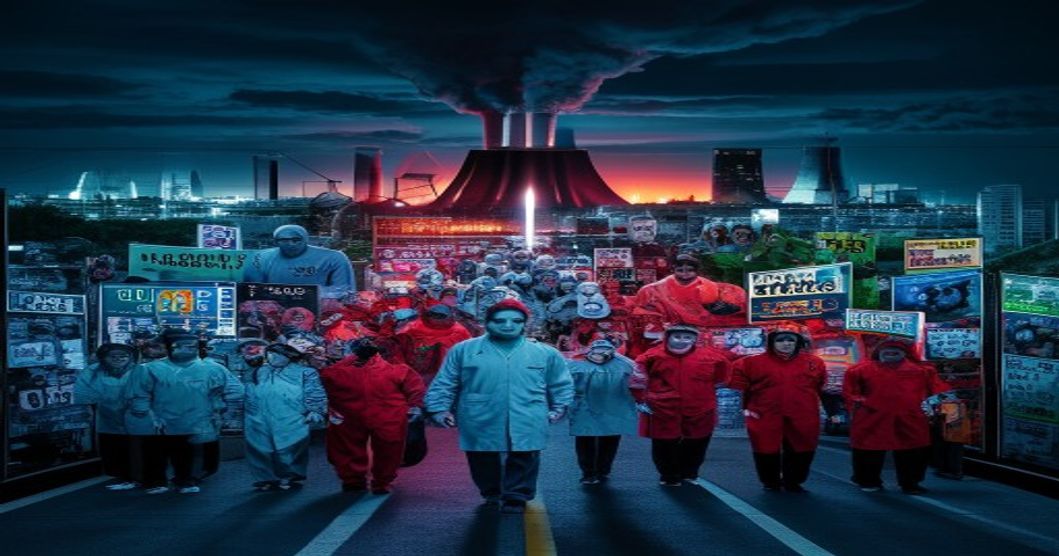
South Korea finds itself at a critical juncture, navigating a complex web of domestic strife, economic ambitions, and persistent geopolitical anxieties. From a deepening medical crisis that has gripped the nation’s healthcare system to its pivotal role in the global tech supply chain and the ever-present shadow of North Korea, the country is a focal point for significant regional and international developments. Understanding these intertwined issues is key to grasping the dynamic landscape of the Korean Peninsula today.
Nationwide Medical Crisis Deepens: A Fight for Healthcare Reform
The most pressing domestic issue currently dominating headlines is the **protracted standoff between the government and the medical community** over proposed reforms to increase medical school admissions. The government’s plan to boost the number of medical students by 2,000 annually is aimed at addressing a perceived doctor shortage, especially in rural areas and essential specializations like pediatrics and emergency medicine. However, thousands of junior doctors, including interns and residents, have staged a mass walkout, disrupting hospitals nationwide.
This unprecedented strike has led to significant strain on the healthcare system. Major hospitals are struggling to maintain essential services, with a backlog of surgeries and canceled appointments, forcing many patients, particularly those with critical conditions, to face severe delays or seek alternatives. The government has taken a firm stance, issuing return-to-work orders and threatening disciplinary action, while the medical community argues that the reforms fail to address fundamental issues like **poor working conditions and inadequate compensation** for specialized fields. The impasse shows little sign of immediate resolution, leaving the future of South Korea’s healthcare in a precarious state.
Economic Pulse: Navigating Global Headwinds and Tech Triumphs
Economically, South Korea continues to be a powerhouse, yet it faces the dual challenge of global economic slowdowns and intense competition. The nation’s **export-driven economy** is heavily reliant on key sectors, most notably semiconductors. While there have been recent signs of recovery in chip demand, particularly with the boom in AI, the volatile global market presents continuous challenges. Companies like Samsung and SK Hynix remain at the forefront of memory chip innovation, but geopolitical tensions and supply chain disruptions can quickly impact their performance.
Beyond semiconductors, South Korea is actively diversifying its economic portfolio. The global popularity of **K-pop, K-dramas, and other K-content** continues to be a significant soft power asset and a growing export industry. The government is also pushing for growth in future-oriented technologies such as batteries, biotechnology, and robotics, aiming to secure new engines for economic growth amidst persistent concerns about inflation and household debt. Maintaining a robust and resilient economy remains a top priority amidst these complex global and domestic pressures.
Geopolitical Tensions: A Shifting Landscape on the Peninsula
The Korean Peninsula remains one of the world’s most volatile regions. **North Korea’s ongoing missile tests and increasingly aggressive rhetoric** consistently keep South Korea and its allies on high alert. Recent reports from various intelligence sources suggest continuous advancements in Pyongyang’s weapons programs, including intercontinental ballistic missiles and potentially tactical nuclear capabilities. This has prompted South Korea to strengthen its defense posture and deepen its military alliance with the United States and Japan.
The trilateral security cooperation among Seoul, Washington, and Tokyo has seen renewed emphasis, conducting joint military exercises and intelligence sharing to counter the North Korean threat. Meanwhile, diplomatic efforts to de-escalate tensions have largely stalled, with Pyongyang showing little willingness to return to denuclearization talks. The delicate balance of peace and stability in Northeast Asia hinges significantly on **managing inter-Korean relations** and the responses of major regional powers like China, whose stance often influences the dynamics on the peninsula.
