
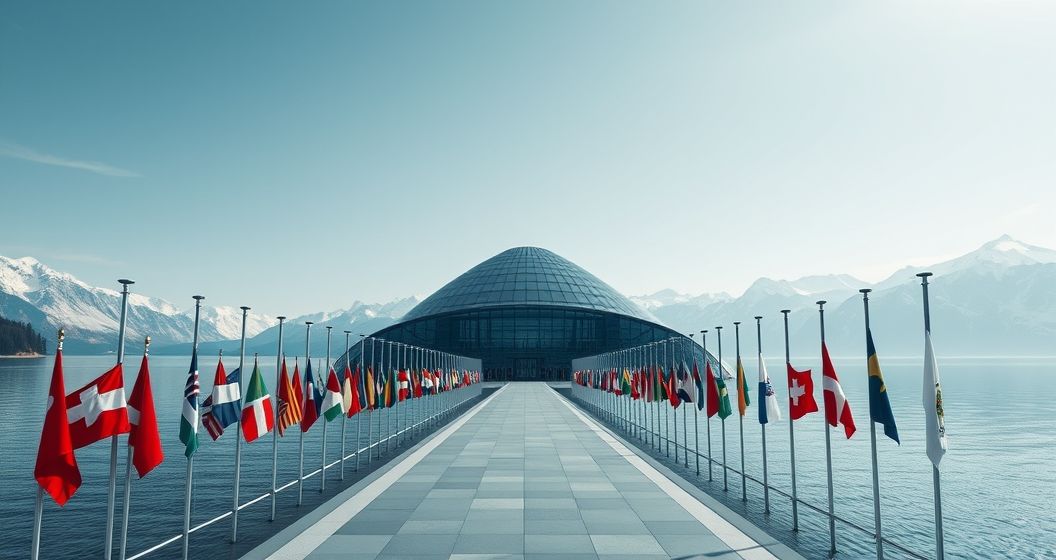
Switzerland is set to host a major international summit focused on forging a path to peace in Ukraine. The high-level conference, held at the Bürgenstock resort overlooking Lake Lucerne, will bring together delegations from dozens of countries and international organizations. The primary goal is not to negotiate an immediate end to the conflict but to initiate a dialogue and build a broad consensus on a framework for a future peace process based on international law.
A High-Stakes Diplomatic Gathering
The event represents a significant diplomatic undertaking for Switzerland, leveraging its long-standing tradition of neutrality to act as a facilitator. High-profile attendees are expected, including U.S. Vice President Kamala Harris, German Chancellor Olaf Scholz, and French President Emmanuel Macron. The presence of so many world leaders underscores the international community’s desire to find a viable solution to the conflict, which has had far-reaching global consequences for security and economic stability.
Swiss authorities have emphasized that the summit is a platform to consolidate different peace proposals and define a clear roadmap. The discussions are intended to build trust and create the necessary conditions for a future stage of negotiations that could eventually include all parties to the conflict. The stakes are incredibly high, with the summit’s success potentially influencing the future trajectory of diplomatic efforts.
Navigating Neutrality and Key Absences
A central challenge for the summit is the absence of Russia, which was not invited and has dismissed the event as futile. Organizers maintain that Russia must be involved at a later stage, but the initial goal is to align the views of the international community first. This position has drawn criticism, with some arguing that no meaningful progress can be made without the participation of a primary belligerent. The absence of China, a key ally of Russia, also presents a significant hurdle for building a truly global consensus.
Switzerland’s role has placed its policy of neutrality under intense scrutiny. While hosting the conference aligns with its humanitarian and diplomatic traditions, the country has also adopted European Union sanctions against Russia. This balancing act highlights the evolving nature of neutrality in the face of modern geopolitical conflicts and the complex diplomatic landscape that Swiss officials must navigate to maintain credibility as an impartial mediator.
Focus on Core Humanitarian and Security Issues
The summit’s agenda is expected to concentrate on three key areas of broad international agreement. These include ensuring nuclear safety, particularly concerning the Zaporizhzhia power plant, facilitating food security by protecting grain exports, and addressing pressing humanitarian issues. The latter involves discussions on the exchange of prisoners of war and the return of displaced persons, including children. By focusing on these less politically contentious topics, organizers hope to find common ground and generate positive momentum for more complex future negotiations.
Conclusion: A First Step on a Long Road
The Bürgenstock summit is widely seen as the beginning, not the end, of a long and arduous peace process. Its success will not be measured by an immediate ceasefire but by its ability to establish a unified international platform and a clear framework for future dialogue. The gathering is a testament to the global desire for peace, but the path forward remains fraught with immense challenges, hinging on sustained diplomatic engagement and the eventual inclusion of all relevant parties.