
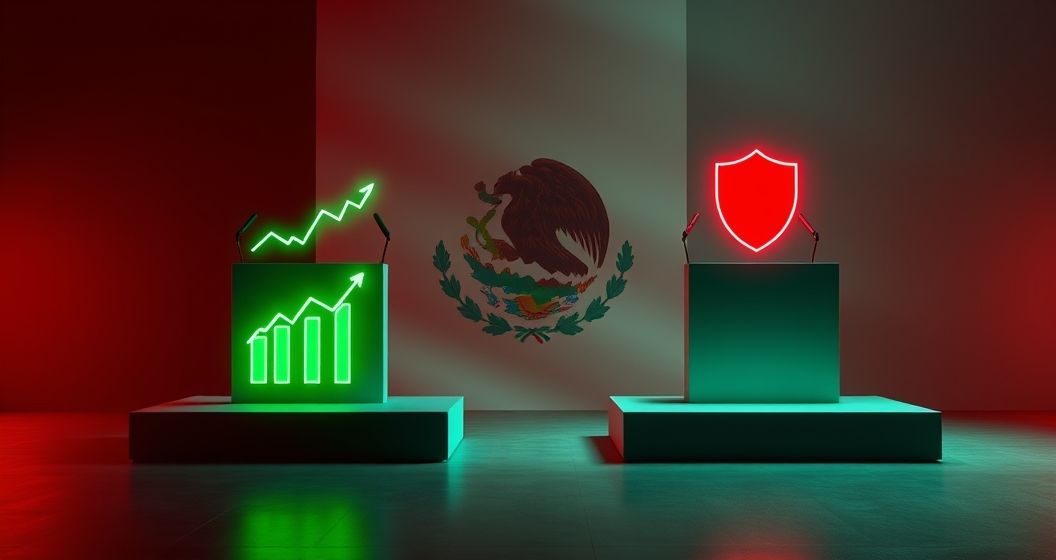
The second presidential debate in Mexico intensified the electoral race as the leading candidates, Claudia Sheinbaum, Xóchitl Gálvez, and Jorge Álvarez Máynez, presented conflicting visions for the nation’s future. The event focused on critical issues including economic growth, poverty, and public security, revealing deep divisions in their approaches and setting the stage for the final weeks of the campaign. The discussion was marked by direct accusations and firm defenses of their respective platforms.
A Heated Exchange on Economic Policy
Economic strategy was a central point of contention. Claudia Sheinbaum, the candidate for the ruling Morena party, defended the current administration’s economic record, emphasizing the stability of the peso and the success of social programs in reducing poverty. She pledged to continue these policies, arguing they have created a more equitable foundation for sustainable growth and a stronger domestic market.
In contrast, Xóchitl Gálvez, representing the opposition coalition, criticized the government’s economic model as insufficient. She argued that despite macroeconomic stability, small and medium-sized businesses have struggled. Gálvez proposed a series of reforms aimed at attracting foreign investment, cutting bureaucratic red tape, and providing greater support for entrepreneurs to generate higher-quality jobs and foster innovation across the country.
Security Strategies Under Scrutiny
Public security, a persistent concern for Mexican voters, prompted some of the most passionate arguments of the night. Gálvez directly challenged the current “hugs, not bullets” strategy, labeling it a failure that has allowed criminal organizations to expand their influence. She advocated for a stronger, more technologically advanced security force and a tougher stance against organized crime to restore order and protect citizens.
Sheinbaum countered by highlighting reductions in certain crime statistics and proposed to consolidate the National Guard while focusing on addressing the root causes of crime, such as poverty and lack of opportunity. Meanwhile, Jorge Álvarez Máynez presented a third way, advocating for a significant shift in drug policy toward regulation and investing heavily in community policing and judicial reform to build trust in institutions.
The Role of Social Programs and Infrastructure
The debate also explored the future of social programs and infrastructure projects. Sheinbaum committed to expanding popular social benefits, viewing them as essential for social justice and economic stability. Gálvez, while agreeing to maintain existing programs, questioned their management and suggested they could be more effective. Both candidates acknowledged the importance of investing in water, energy, and transportation infrastructure to support future development.
Post-Debate Analysis and Voter Impact
Following the debate, political analysts noted that while all candidates delivered their core messages, the sharp exchanges likely did more to solidify existing support than to sway undecided voters. The event underscored the clear choices facing the electorate: continuity with the current administration’s policies under Sheinbaum, a significant change in direction with Gálvez, or an alternative path proposed by Máynez. The focus now shifts to how these messages will resonate with voters in the final stretch of the election.
