
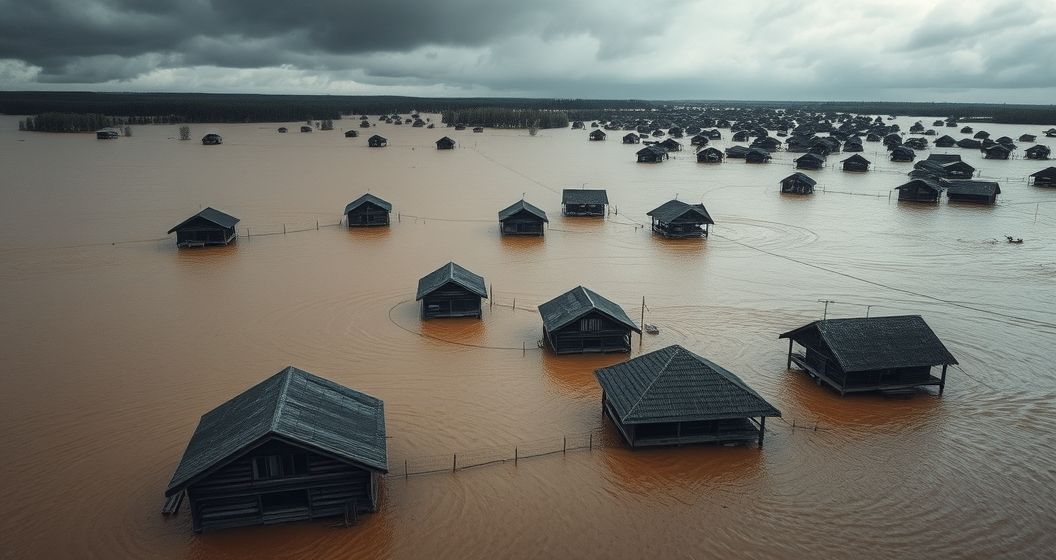
A state of federal emergency has been declared in Russia’s Orenburg region as it battles the worst flooding seen in decades. The crisis was triggered by the collapse of a dam in the city of Orsk, leading to mass evacuations and submerging thousands of homes. The Ural River has surged to unprecedented levels, creating a critical situation that continues to evolve and threaten more communities downstream.
The Orsk Dam Breach and Initial Chaos
The disaster began when an embankment dam in Orsk, a city near the border with Kazakhstan, failed under the pressure of melting snow and heavy rainfall. The breach sent a torrent of water into the city, forcing the urgent evacuation of several residential areas. Initial reports indicated that the water levels rose rapidly, catching many residents by surprise and inundating entire districts within hours. Emergency services were immediately deployed to assist with the evacuation efforts, focusing on moving people from the most vulnerable areas to temporary shelters.
Local authorities described the flood as a once-in-a-century event, noting that the dam was designed to withstand significantly lower water levels. The rapid surge overwhelmed the city’s defenses, leading to a swift escalation of the crisis. The focus in the immediate aftermath was on saving lives and preventing further casualties as the floodwaters continued to spread through the city, cutting off power and disrupting essential services.
A Widening Federal Emergency
As the scale of the disaster became clear, the situation was elevated from a regional to a federal state of emergency. This declaration allows for the mobilization of greater resources and federal support to manage the crisis. The Ural River, Europe’s third-longest, continued to swell, threatening not only Orsk but also the regional capital, Orenburg. Projections indicated that the river would reach dangerous new peaks, putting tens of thousands more residents and properties at risk.
The government’s response now involves a coordinated effort between local emergency teams and federal ministries. The primary objectives are to reinforce flood defenses in downstream cities, provide aid to the displaced, and assess the full extent of the damage. Officials have warned residents in at-risk areas to evacuate immediately, emphasizing that the situation remains extremely dangerous and unpredictable.
Human Impact and Economic Toll
The human cost of the flooding is substantial. Officials report that over 10,000 residential buildings have been flooded across the region, displacing more than 6,000 people, including a significant number of children. These figures are expected to rise as the floodwaters crest in Orenburg and other populated areas along the river. Temporary accommodation centers have been set up in schools and public buildings to house those who have lost their homes.
Beyond the immediate human impact, the economic consequences are severe. The flooding has damaged critical infrastructure, including roads, bridges, and power lines. Businesses and agricultural lands have been submerged, signaling a long and costly recovery process for the region. The full economic toll will not be known until the waters recede, but it is expected to be one of the most significant natural disasters to hit the region in modern history.


